
Will Artificial Intelligence Kill Journalism?
And what is the future of Truth?


I recently gave a speech at the International Digital Media Licensing Association conference on the future of journalism and the truth in an age of Artificial Intelligence. It’s a raw subject for many in the industry as the ownership of every image, word and video is threatened by AI.
This week’s podcast touches on the questions I posed to the audience during my speech, and which I keep on trying to calibrate as we move relentlessly forward in a super-charged changing world.
I asked a simple question; is journalism a dying profession? Are we the switchboard operators, the lamplighters, and film projectionists of our age?
What does the future look like for journalists, photographers and writers? And for the audiences and readers that consume our stories and pictures?
There’s no going back. AI is here, and it’s evolving at a dizzying pace. We have to be pragmatic, and proactive about the realities.
The Collapse of the Newsroom Floor
Journalism is facing a profound dilemma because AI can write an article, summarize a report, fact-check, or even generate “news” from vast datasets. AI can craft, edit, and present a story faster and cheaper than any human.
The trend of job loss in newsrooms long predates AI, but the new technology is accelerating the decline dramatically.
Two-Thirds Lost: Already, two-thirds of U.S. newspaper jobs have been lost in the past twenty years.
Recent Cuts: This trend is now being accelerated by AI rollouts in newsrooms. In just the past month, NBC News eliminated 7% of its newsroom jobs - about 140 journalists - and The Wall Street Journal laid off about a dozen reporters. Each week there’s a new announcement involving media redundancies.
The economics are simple: an AI can churn out a thousand basic articles in the time it takes a human to write one. We will never win that race.
The Unquantifiable Cost: The Death of Truth
It’s not just about job losses; it’s about the unquantifiable and intangible thing we call The Truth (with a capital T).
With the rise of generative AI, we can now create things that look so real, so plausible, that they are almost indistinguishable from reality. We’re not just talking about deepfakes of politicians saying things they never said; we’re talking about the potential for a world where every single image, every piece of audio, and every video clip is viewed with a heavy dose of skepticism.
How do our audiences discern what is real and what is synthetic? When a photograph is no longer proof of a moment, and a video is no longer a record of an event, what is the journalist’s role?
I’m not anti-progress - in fact, I think AI is fantastic as a tool to save time, wade through reams of information, transcribe interviews, and give a different perspective. But will it kill journalism - that old-school reporting I grew up with?
Lessons from First Principles
We’re slap-bang-wallop in the middle of an industrial revolution. As new technologies are developed, it’s vital to not overshoot their impact or underplay it. I think it’s right to be both cheerleader and naysayer in the same breath.
AI’s threat reminds us - forces us - to go back to First Principles.
Journalism is one of the oldest professions in the world. Who painted the rock art on caves? The dude in the tribe who would today hold a camera on the frontlines of Ukraine. Who were the scribes in Ancient Egypt? The curious ones who made connections with the powerful. Herodotus, who wrote the first history of the world, was, in essence, an early journalist.
The basics of our profession are simply to ask these questions: Who? When? Why? What? Where? The solution and answer to everything lies in repeatedly asking those questions.
The Future: Boots on the Ground
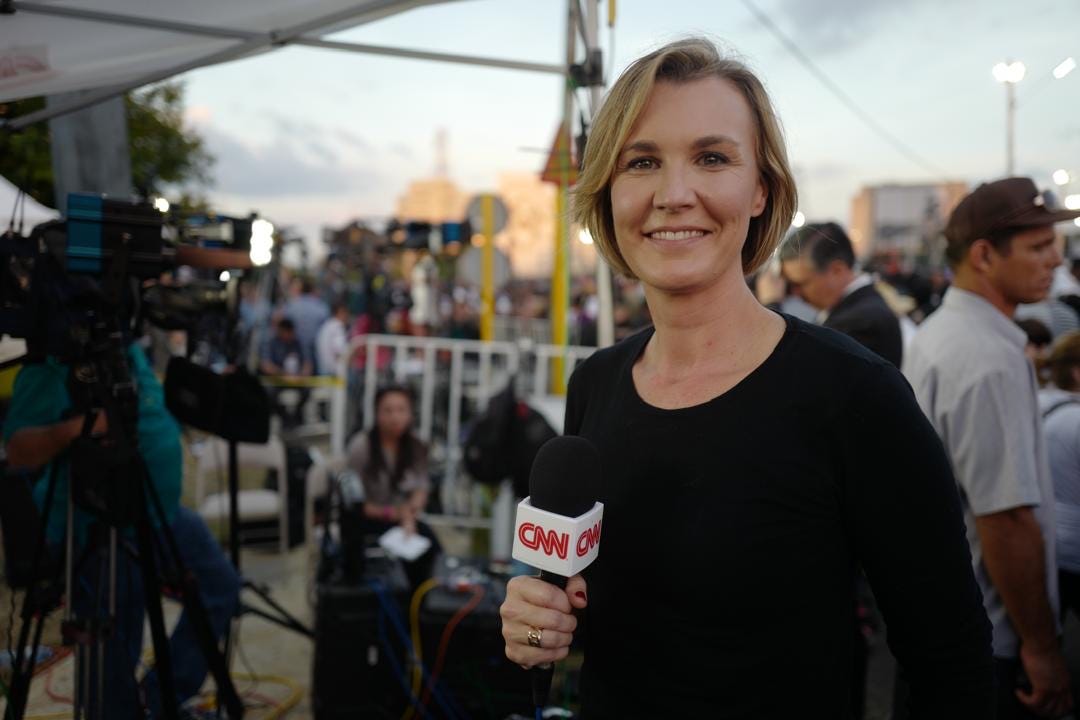
The future of journalism lies in leaning into what AI cannot do. We need to double down on human-to-human reporting.
Empathy and Discretion: Real-life reporters have empathy, listen, and discern in a way no algorithm can truly grasp.
The Foreign Correspondent: While human news anchors may eventually be replaced by avatars, what cannot be replaced is the foreign correspondent and the war photographer - the hack with dirty boots in remote places and shaky hands in dangerous places.
The fly-by-the-seat-of-your-pants journalism - asking why, when, how - will always survive. It always has.
Our role will evolve. We will become even more crucial as verifiers, curators, and interpreters of a complex world. If we control the input and the output, the machines cannot overwhelm our fundamental role.
As long as history itself, people don’t just want information. They want understanding. They want connection.
I am hoping that the one-on-one conversations we have are increasingly more valuable as AI penetrates all our lives.
Here’s to telling stories by the campfire,
Best,
Robyn
Thanks for writing this, it clarifies alot. Very insightful.